

With the warmer weather arriving, our team and tamariki at The Vines Early Learning Centre in Henderson have been giving our spring garden a much-needed refresh. The children have loved helping bring a burst of colour and life to our outdoor spaces.
The garden becomes a living classroom where curiosity grows as fast as the plants themselves.
Gardening is more than a seasonal project. It is a hands-on journey of discovery that supports children to explore, connect with nature and take pride in caring for their environment. It also links beautifully to our Te Whāriki curriculum, especially the strand of Exploration – Mana Aotūroa, where children learn through active involvement with the world around them.
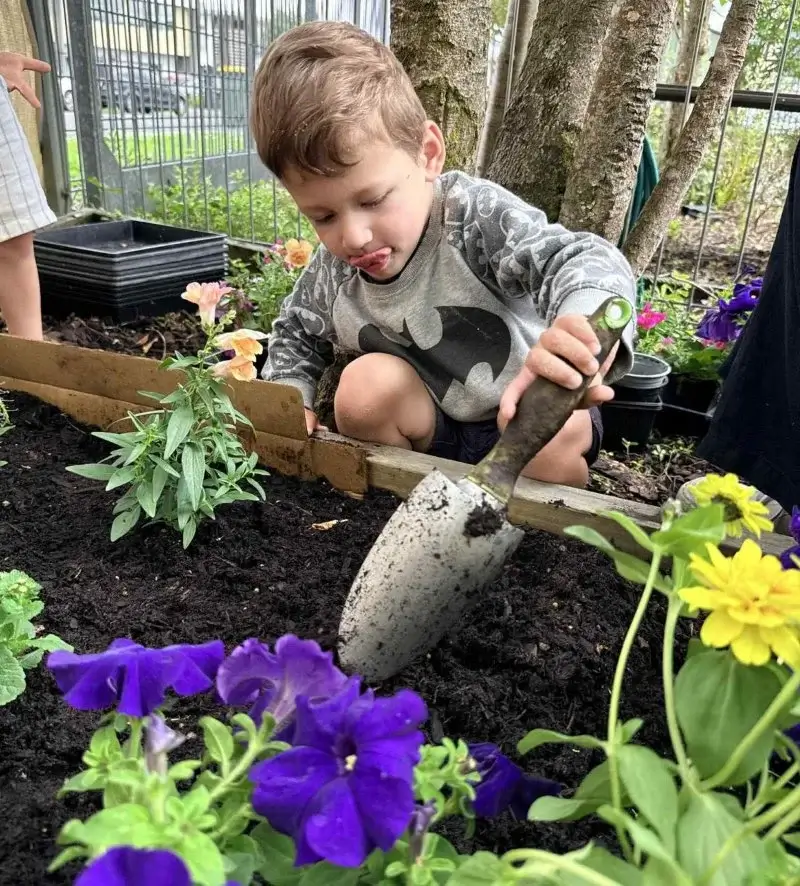
Gardening allows children to make sense of their environment in real, meaningful ways. They learn that plants need sunlight, water, air and care. They notice how plants change from week to week and begin to understand patterns in nature. These simple discoveries help build a strong foundation for scientific thinking and environmental understanding.
How does gardening support learning in early childhood?
Children learn by doing. They touch, observe, experiment and discover. Our spring gardening provides rich opportunities for tamariki to:
- See themselves as explorers
- Discover how the natural world works
- Develop confidence in trying new tasks
- Build care and respect for living things
- Learn what plants need to grow
- Understand how their actions can affect well-being.
How do children learn kaitiakitanga in the garden?
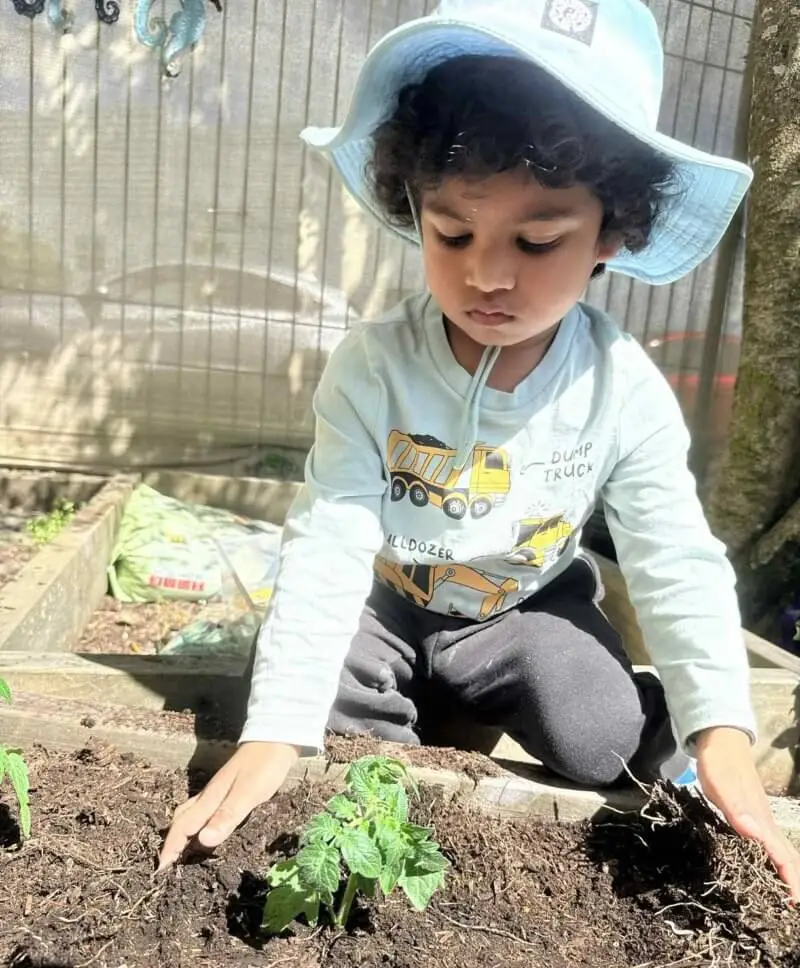
As we refreshed our garden beds, tamariki practised kaitiakitanga, showing care and responsibility for the living world. Through gentle hands and thoughtful actions, children learn how their care makes a difference. They
- Dig the soil with care
- Water plants gently
- Notice insects and learn why they are important
- Talk about how to protect and nurture growing things
These small moments nurture empathy and help children see themselves as active guardians of the environment.
What did we plant this spring?
This season, our tamariki planted:
- Herbs such as mint, parsley and basil
- Lettuces and tomatoes to watch grow and harvest
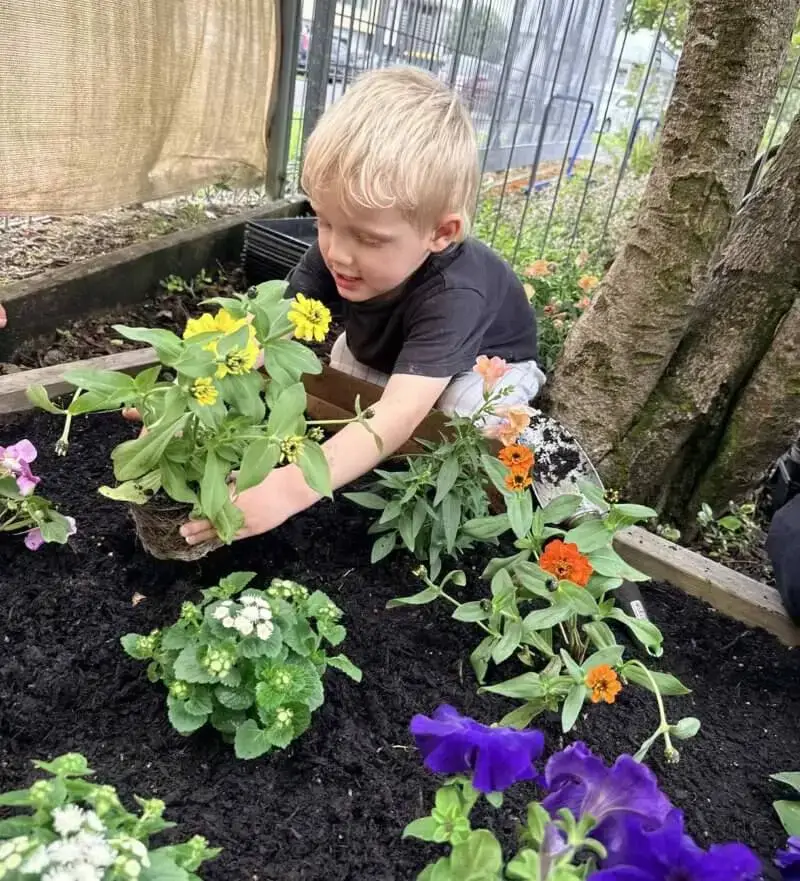
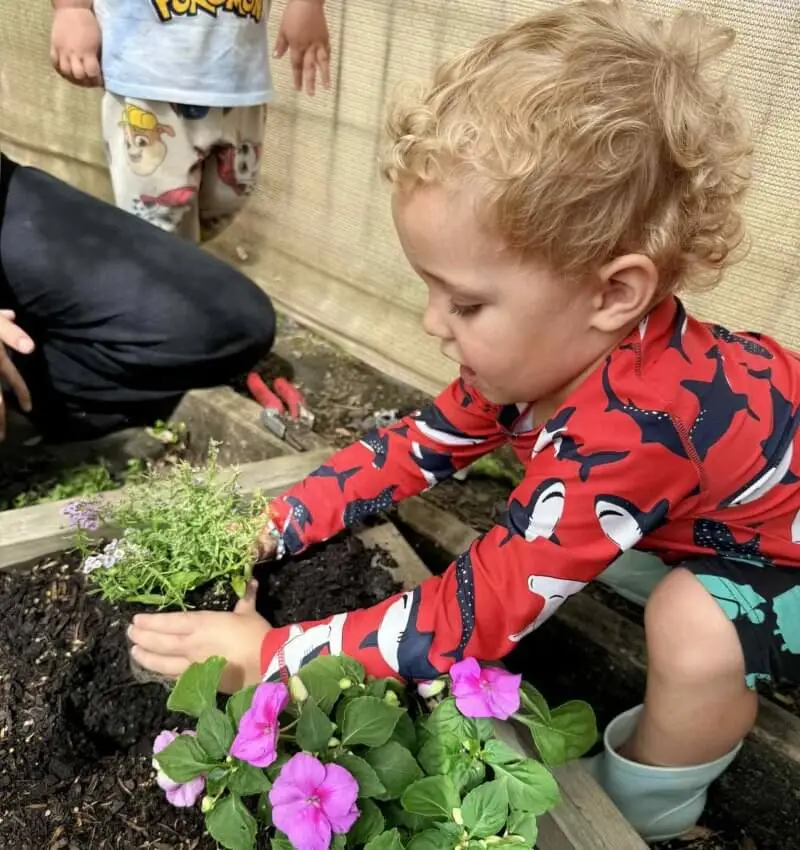
- Flowers, including bright pansies, zinnias and impatiens.
The children enjoyed deciding where each plant should go, talking about colours, textures and smells. Their pride was easy to see as they pressed seedlings into the soil and patted the earth around them.
Why is outdoor play so important for tamariki?
Gardening isn’t just about plants. It boosts wellbeing, confidence and social development. When children are outside, they naturally:
- Share tools and take turns
- Chat, laugh and work alongside friends
- Solve problems, such as how deep to dig or how much water to add
- Build strength, coordination and fine motor skills
These are the moments that help tamariki feel capable, connected and confident.
Why does gardening matter for early learning?
Gardening supports early learning in so many ways:
- Scientific thinking as they observe, predict and question.
- Maths skills as they count seeds and compare plant sizes.
- Language development through new words like sprout, stem and seedling.
- Emotional growth through calm, focused activities.
- Collaboration as they work alongside their peers.
Most importantly, gardening gives children a sense of purpose and joy as they watch something grow because of their care.
Growing happy, confident explorers
Refreshing our spring garden has brought colour, life and learning to The Vines ELC. As our plants grow, so do our tamariki. They are developing curiosity, confidence and an understanding of the world around them while enjoying sunshine, fresh air and shared adventures.
We are proud to offer a space where children can learn, explore and care for the natural world together.