Bringing stories to life in the Pihi Room
How a simple story can spark creativity, sensory exploration, and communication.
Few books epitomise childhood quite like The Very Hungry Caterpillar. With its bright illustrations, simple rhythm, and much-loved story of a caterpillar munching through fruit to become a gorgeous butterfly, it has become a timeless favourite for generations of young children.
In fact, it is so much a part of families’ lives all over the world that, according to Penguin Books New Zealand, a copy is sold somewhere in the world every 30 seconds.
Shared learning grows naturally from something tamariki already love, and at The Vines Early Learning Centre, The Very Hungry Caterpillar is one of those special stories that certainly delights our children in the Pihi Room. Therefore, our kaiako use it as a starting point for a range of inspiring activities to develop a love of learning that goes beyond the page.
How do we bring The Very Hungry Caterpillar to life?
The Very Hungry Caterpillar opens the door to conversation, creativity and sensory play beautifully. Rather than just reading the story, our tamariki connect the story with real-world exploration and creativity. For example:
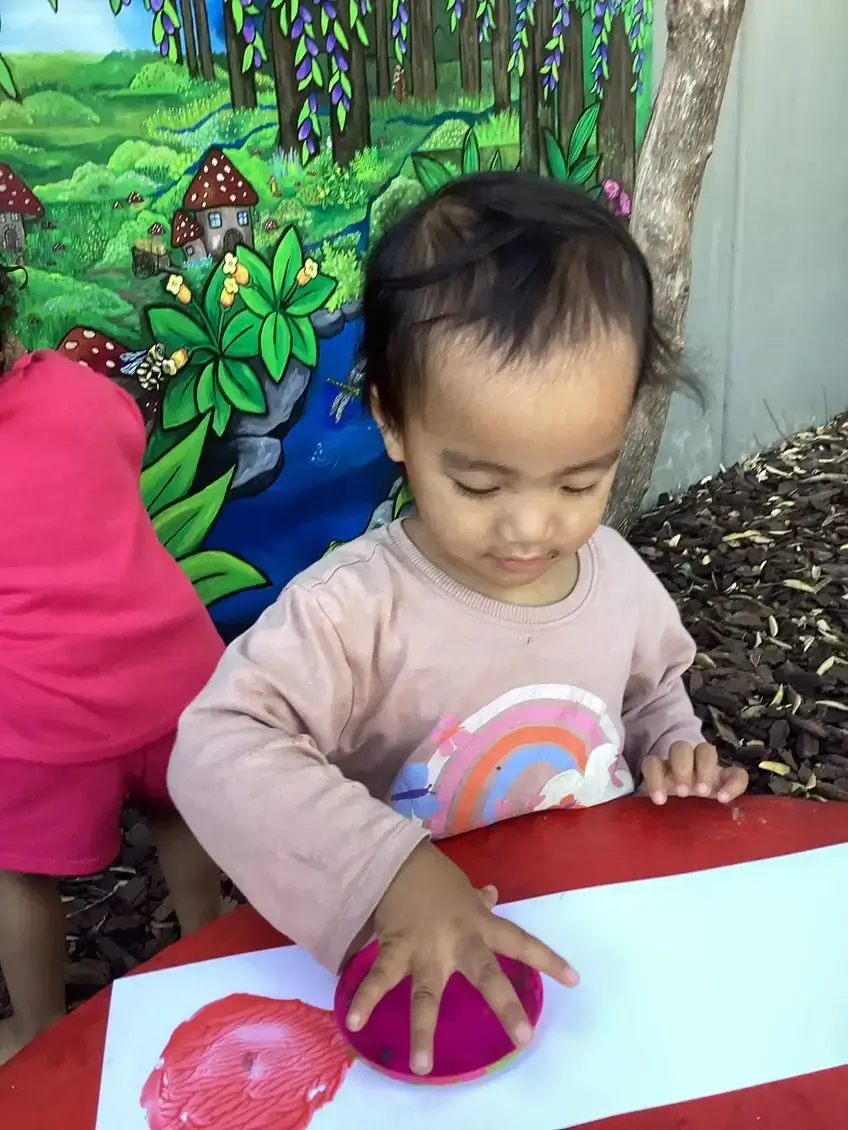
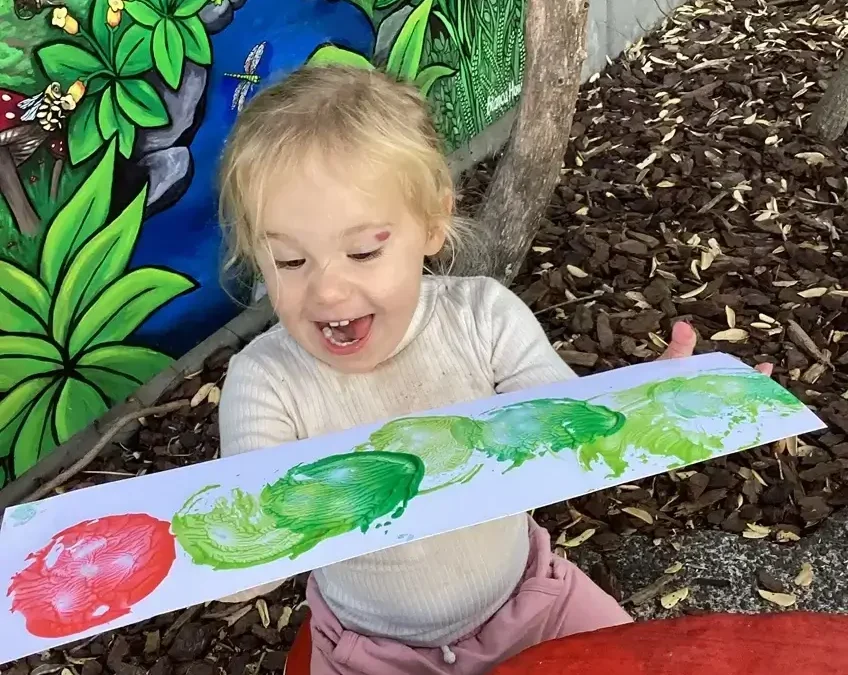
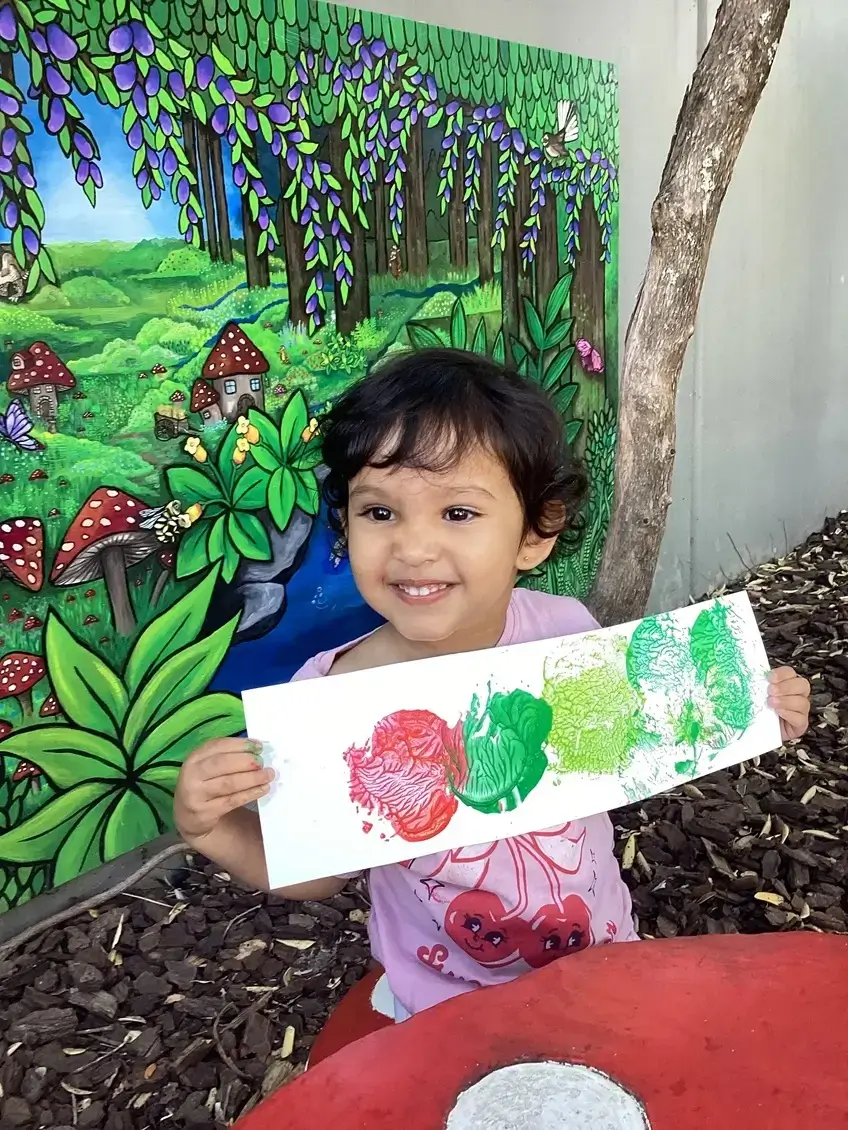
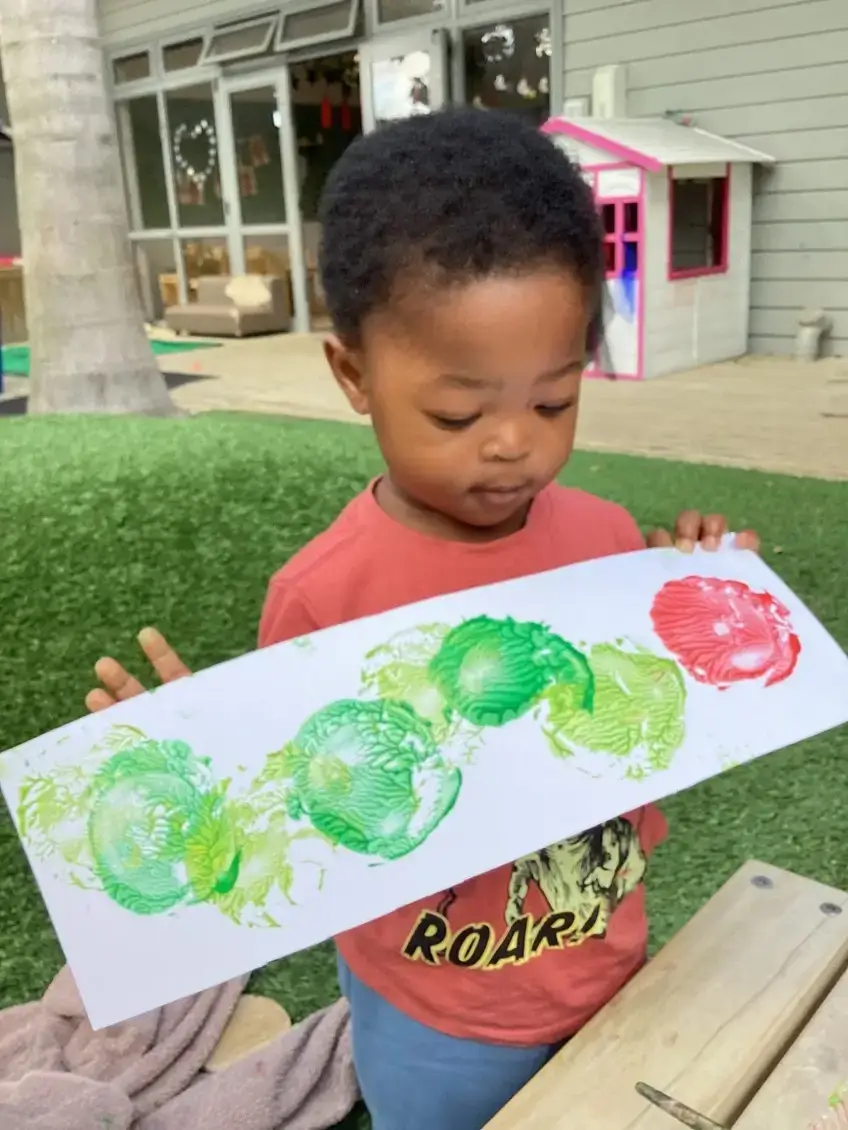
- Rock and stamp painting to recreate elements of the story’s environment. These activities help develop fine motor skills and allow children to explore textures, colours, and patterns.
- Water play with droppers and rolled paper towels to mimic how a caterpillar moves,
- Colour mixing to explore how the beautiful butterfly is created
- A shared kai experience of fruit tasting inspired by the foods in the story is a playful opportunity for tamariki to taste different fruits, explore flavours, and build confidence in trying new foods. They also develop vocabulary to describe what they are experiencing.
When children can paint, move, mix, taste, squeeze and experiment, they are making deeper and more meaningful connections.
Why story-based and sensory learning matter
Tamariki learn best when they can actively explore an idea rather than simply hear about it. By engaging with stories in hands-on ways, children develop skills across many areas of early learning:
- Communication and language: Listening to and retelling stories helps children build verbal skills and experiment with new words.
- Creativity and expression: Using visual arts, movement, and imaginative sensory play, children learn to express ideas and emotions.
- Social skills: Shared activities encourage cooperation, turn-taking, and enjoyment in group participation.
- Early literacy: Interacting with print symbols, storytelling, and written materials fosters recognition and understanding of written language in meaningful contexts.
How this links to Te Whāriki
Te Whāriki, Aotearoa New Zealand’s early childhood curriculum, emphasises holistic learning where children develop through relationships, play, and exploration. In the Pihi Room, our activities with The Very Hungry Caterpillar support key strands of the curriculum:
- He kōrero ā-waha – verbal communication: Children develop oral language by listening, responding, and sharing ideas about the story.
- He kōrero paki – enjoying and creating stories: Tamariki have repeated opportunities to hear, retell, and make up stories, deepening comprehension and imagination.
- He kōrero tuhituhi – recognising print symbols: Through books and story-related activities, children become familiar with letters, words, and storytelling conventions.
- He kōrero auaha – creative expression: Art, movement, and music allow children to express feelings and ideas in multiple ways.
Learning beyond the classroom
There is so much learning woven into activities like these. Using stories like The Very Hungry Caterpillar, tamariki move, paint, mix colours, or taste fruit; they connect literacy with physical, sensory, and social learning. These experiences encourage curiosity, problem-solving, and confidence: skills that children carry with them as they grow.
Encouraging a love of learning
When activities begin with something children genuinely love, that’s often when the richest learning happens.
At the Vines ELC, our kaiako provide rich, meaningful learning experiences that go far beyond simply reading. Through the magic of a much-loved book, children become actively involved, expressing themselves, discovering the world, and making connections between ideas, actions, and results. Our tamariki develop the skills and confidence to become capable, curious, and expressive learners, rejoicing when the helpless, small, insignificant caterpillar turns into a beautiful butterfly.
The Very Hungry Caterpillar “is an affirmation to all children. It says: I too can grow up. I, too, can unfold my wings and fly into the world. I think it’s this message of hope.” Eric Carle, in a 2019 interview celebrating the 50th anniversary of his much-loved story.